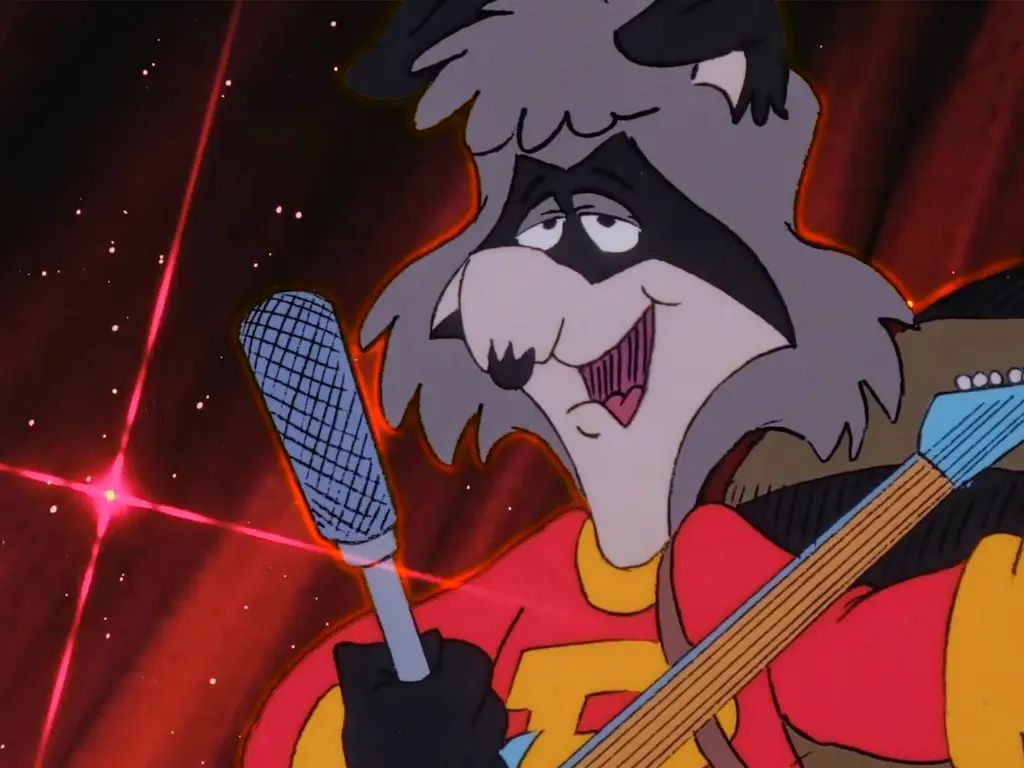
With the first ever digital release of The Raccoons’ iconic long lost soundtrack, a ‘fauxstalgia’ for the Canadian cult kids show has curiously made the UK the series’ strongest fanbase.
Those of a certain vintage will likely remember The Raccoons best for ‘Run With Us’, its banger of an end-credits theme that had absolutely no right going quite as hard as it did. However, its legacy has gone far beyond that hit track, especially, and perhaps quite randomly, among UK fans.
Launched in 1985 with a number of specials, the quaint animated series followed the sweater-wearing Bert Raccoon and his forest-dwelling pals as they navigated a range of surprisingly deep issues spanning friendship and teamwork, to sustainability and capitalism. With the pink, cigar-chomping aardvark Cyril Sneer and his three little pig cronies constantly on their tail, Bert’s adventures in the Evergreen Forest were steeped in something that feels oddly lacking in 2026: a heady dose of optimism, positivity and hope.
Get more Little White Lies
Indeed, as evidenced by the remakes, reimaginings and sequels that flood our screens, it’s clear a part of our psyche drives us towards nostalgia in uncertain times – regardless of whether the comfort we find is something we’ve experienced first hand. The dream-like memories of Saturday morning telly are a great example of this kind of ‘fauxstalgia’ in action. Within the world of these misty-eyed kids’ animations, no show looms quite as large as The Raccoons.
If you were in the UK, you likely found The Raccoons airing early on BBC One, where it clearly left an impression. Despite being heavily influenced by its Canadian creator Kevin Gillis and filled with iconography from The Great White North and its American neighbour (episodes featured ice hockey, baseball and sprawling forests, and even its titular critters are products of their location), UK fans not only embraced The Raccoons but carried it with them into adulthood.
“UK fans were there right from the very beginning and they’re still the top fans in the world – even more so than Canada, although it’s really close,” Gillis tells us with a smile. As The Raccoons’ writer, producer and creator, he poured much of his own personal experiences of his time spent in rural Canada into its stories. “The fans are really coming out of the woodwork now, especially when it comes to the music,” he adds, referencing how demand from UK fans proved so strong, it led to him remastering and re-issuing a new 10-track soundtrack release Evergreen Nights. “It feels really great.”
The bond between UK viewers and Gillis’s fantasy cartoon Canada is an odd one, particularly considering much of the show would’ve been relatively unrelatable to the average UK viewer. Yet The Raccoons hit a nerve that resonates. Today, 4K remasters are readily available on three separate UK streamers where they attract fans old and new. Meanwhile, the country holds the number one spot for record streams and download numbers of its glossy, retro soundtrack. So what’s the deal?
“We were unabashedly Canadian, not because we set out to be that way, it just came out of the experiences I had as a kid growing up,” offers Gillis. “I think UK viewers liked it because they may have looked at Canada as one of those last frontiers. The image it presented in their head may have led them to think ‘I’d love to be out there as an explorer; climbing mountains, going through forests, paddling, canoeing…’ I think there’s a fantasy element of wishing they could go do all that,” he adds, pondering The Raccoons’ fauxstalgia effect. “The show unknowingly presented a landscape full of big, wide open spaces and I think people see that as something they’d like to experience themselves.”
Of course, it wasn’t just the show’s leafy backdrop that made it appealing. In addition to its gauzy, soft-coloured animation, The Raccoons frequently focused on topics that feel relevant to the many issues we face today, with each episode’s (roughly) 20-minute run-time providing the breathing room needed to unpack them with nuance and consideration. Remember those? They’re yet another example of the show offering us something we now seem to be sorely lacking in an age of mindless doom-scrolling.
“Originally, we started with the environment. A lot of that came from my parents, who were very environmentally conscious,” remembers Gillis. “Then we grew into other stories on things like bullying, friendship, teamwork… We always encouraged viewers to think independently and have debates about the environment and consumerism, which is really timely right now. How long can we keep taking from Mother Earth? Who are the people pushing back against things like big data centres the most? Young people, millennials and Gen-Z-ers – and that’s our audience,” he reasons. “Millennials grew up on The Raccoons, and now they’re introducing it to their kids.”
It likely doesn’t hurt that the show’s big bad feels eerily reminiscent of one of today’s most divisive figures. Gillis has previously described the money-obsessed Cyril Sneer as a “serial get-rich-quick and infamous robber-baron”. Remind you of anyone?
“Well, this was 40 years ago and we didn’t have people like the ‘Orange President’ in our world at that time, thankfully,” laughs Gillis, brushing off the idea that his fictional pink antagonist was influenced by our real orange one. “But you’re right – people do make the connection because there are people like that out there.”
However, unlike Donald Trump, Cyril did have redeeming qualities, with the character ultimately carving out a path as an unlikely antihero as the series progressed, instead of an out-an-out villain. “Cyril did have a warm spot in his heart for his son Cedric,” Gillis quickly points out, highlighting the differences between the two. “It wasn’t a black and white show and Cyril wasn’t always a ruthless villain. He had a warm side to him – as much as he berated those pigs.”
Perhaps the root of The Raccoons’ fauxstalgia power lies in our collective yearning for a slower pace. “Like many things in life, there’s different ways of looking at people, characters and issues and that complexity made the show something more than just another kids action show,” suggests Gillis of its lasting impact. “The complexity and complications it offered helped draw audiences in. Today, broadcasters want really short shows – 11 minutes, seven minutes or three minutes. The fact we had time to unfold a story over 20-something minutes is unheard of today. You really don’t have time to delve into the nuances that an issue presents to you,” he laments.
With so many links back to the topics and trials of today – and with an audience that seems to be growing – it’s no wonder Gillis is rounding out The Raccoons’ extended 40th celebrations with plans to bring it back to screens. “We’re developing a new series and hopefully a movie,” he reveals. “Our writers are working on it. We have new designs and are trying to figure out whether it’s going to be 3D, 2D or a mix.” Will it retain the same thoughtful pace that led to its longevity? It’s a question that’s been on Gillis’s mind: “If it were made today, it’d feel slow,” he reasons. “We’ve got to think about that. I certainly don’t want to disappoint our loyal fans by speeding it up.”
For Gillis, the idea of returning to the Evergreen Forest is a bit surreal, but one he’s more than grateful for. “I never thought we’d get a series, let alone five – and I never thought we’d still be talking about this 40 years later,” he laughs. “It’s the fans that have made that happen, and it’s really humbling.”